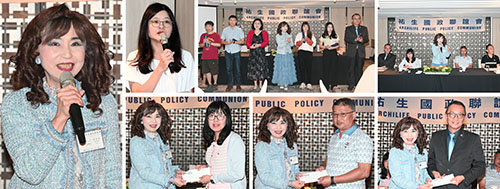
本會於2026年4月19日假晶華酒店地下三樓晶英會舉行「祐生國政聯誼會」。由主持人黃晉英秘書長宣布後揭開當日活動序幕,在來賓介紹、慶生之後,隨即由主持人帶來重要訊息:「美國與伊朗的停火協議即將屆滿,後續談判仍充滿變數,世界局勢正處於高度敏感的時刻。提醒大家隨時觀測全球趨勢變化,並跟隨國際脈動靈活調整策略與步伐,以期在變局之中化危機為轉機。另外,面對AI浪潮,以芬蘭教育為例,該國強調學習數位化前,先學會當「人」,因社交技能是一切學習的根基,此外,使用者亦須具備獨立思考與判斷力,才能有效運用AI工具。面對異質多變的環境,希望大家都能堅守自己的崗位,秉持審慎評估與積極應變的態度,共同推動臺灣邁向更美好的未來。」
The April Archilife Public Policy Communion of 2026 was held on April 19, 2026. After introducing the guests and the birthday celebrations, Secretary General Huang Chin-ying made the following announcement, "The prospects for future negotiations are exceedingly uncertain, as the ceasefire deal between the United States and Iran is set to expire. The global situation is currently at a critical point. Everyone is urged to closely monitor global trends and adapt their strategies and tempo in accordance with international developments. This will facilitate the transformation from a crisis into an opportunity amidst these changes. In response to the AI surge, Finland's education system emphasizes that, prior to learning about digitalization, individuals must first acquire the ability to conduct themselves, as social skills are the bedrock of all learning. Additionally, in order to effectively employ AI tools, users must also exhibit independent thinking and judgment. In order to propel Taiwan toward a brighter future through concerted efforts, it is intended that all individuals will remain at their posts and provide prudent evaluations and proactive responses in the face of a heterogeneous and ever-changing environment."
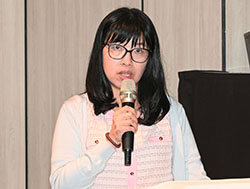
緊接著進行專題演講,由生活特組組長鄭瑋寧小姐主講「生活特組2025年下半年研究成果報告」。主講人首先表示本階段整體研討,嘗試以更宏觀的視角審視未來世界發展方向,主要從氣候環境變異、人口結構變遷、科技發展預測、國際情勢研判等四個重要層面展開,建構一個以2050年為時間座標的情境框架,再根據這個基礎框架,進行整合性思考,綜整提出「疫後新世界指引」,並研擬相關課題。展望未來,生活特組將持續深化,並研擬「祐生研究基金會碩士學位論文獎助辦法」,導引相關核心議題的研究,期能提供祐生作為擘畫臺灣永續發展,引領未來世界走向,創建人類新文明的重要依據。
Next on the schedule was the keynote speech. First, Ms. Cheng Wei-ning presented a speech on "Archilife Living Special Team's Research Result Report for the Second Half of 2025." The speaker began by stating that this phase of the seminar aimed to examine the future direction of global development from a more macro perspective, focusing on four key areas: climate and environmental change, population structure shifts, technological development forecasts, and international situation assessments. A situational framework was constructed with 2050 as the time coordinate. Based on this foundational framework, integrated thinking was applied to thoroughly present "The Guidelines for the Post-Pandemic New World" and formulate pertinent topics. Looking ahead, the Archilife Living Special Team will continue to refine its work and devise "Archilife's Guidelines for Scholarships of Master's Dissertation." This will steer research on key topics, with the goal of serving as a basis for Archilife Research Foundation's planning of Taiwan's sustainable development, leading the future global direction, and constructing a new human civilization.
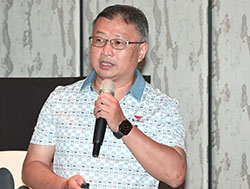
接著由國政委員陳遠鴻先生主講「建築物弱層耐震補強修復說明」。主講人首先表示臺灣地震頻繁,歷次強烈地震建築物倒塌主因之一,為軟弱層遭破壞後,導致整體結構系統不穩定而崩塌。主講人透過展示地震災損影像,提醒大家應記取教訓,適當的耐震補強是降低損害的關鍵。因此,推動弱層補強的目標,在於排除建築物軟弱層的破壞,透過少許經費,即可大幅降低建物於地震來臨時瞬間崩塌的風險。主講人也進一步說明私有建物耐震弱層補強的補助申請辦法,建議當建物耐震不足需改善時,可先採弱層補強,以快速、安全、省錢為原則進行,實質保障生命財產安全。
Next, Mr. Chen Yuan-hung spoke on "An Explanation of Seismic Retrofitting and Repair of Weak Building Stories." The speaker first stated that earthquakes are prevalent in Taiwan. In the past, the destruction of weak stories has resulted in the overall structural system becoming unstable and collapsing, which is one of the causes of building collapses following high-intensity earthquakes. Everyone is reminded to learn a lesson from this, which is that the key to reducing damage is to implement appropriate seismic retrofitting. Therefore, the objective of promoting the retrofitting of weak stories is to eliminate the ruin of the weak stories of buildings. With minimal funding, the risk of buildings collapsing instantaneously during an earthquake significantly reduced. The speaker further elaborated on the "Guidelines for Subsidy Applications for Seismic Retrofitting of Weak Stories in Private Buildings." He proposed that when a building’s seismic resistance is poor and has to be improved, weak story retrofitting should be implemented first. This should be done based on the principles of speed, safety, and cost-effectiveness in order to effectively safeguard life and property.
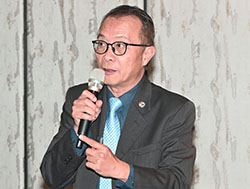
接著由國政委員林得恩先生主講「氣候異變在臺灣!」。主講人首先表示氣候變遷所造成的全球暖化,已顯著影響臺灣,增溫速度高於全球平均。另外,臺灣的颱風季與汛期也將延長、延後,而短延時強降雨將更趨頻繁,往往造成淹水災情。此外,降雨型態改變將導致枯水期延長,降雨時空分布極度不均。而今年聖嬰現象也將影響臺灣,形成較多水氣、夏季高溫及暖冬。為因應上述課題,政府除精進氣象雷達遙測產品之運用外,亦積極導入AI預測降雨線時序及土石流潛勢評估,期許透過智慧防災,有效因應未來多變的極端氣候。
Next, re increase has surpassed the global average. In addition, the typhoon and flood seasons in Taiwan have been either extended or postponed, and short-duration intense rainfall will become more frequent, often resulting in floods. Furthermore, changes in rainfall patterns may lengthen the dry season, resulting in an exceedingly uneven spatiotemporal distribution of rainfall. Taiwan will also be affected by this year's El Nino, which will lead to increased moisture, high summer temperatures, and a warm winter. In response to the aforementioned applications, the government has actively introduced AI to anticipate rainfall time series, assess debris flow potential, and improve the use of meteorological radar remote sensing products. It is hoped that by implementing smart disaster prevention measures, the unpredictable severe climate change of the future will be effectively addressed.
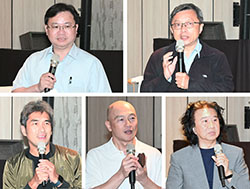
演講完畢,黃晉英秘書長代表基金會致贈謝禮予主講人。接著在與會者紛紛利用「餵豬時間」提出個人意見與看法交流後,圓滿地結束四月份國政聯誼會。
After the speech, Secretary General Huang Chin-ying presented a gift to the speakers on behalf of the foundation. Then, attendees expressed and exchanged their opinions and views during the piggy hour. The April Archilife Public Policy Communion ended smoothly.
